
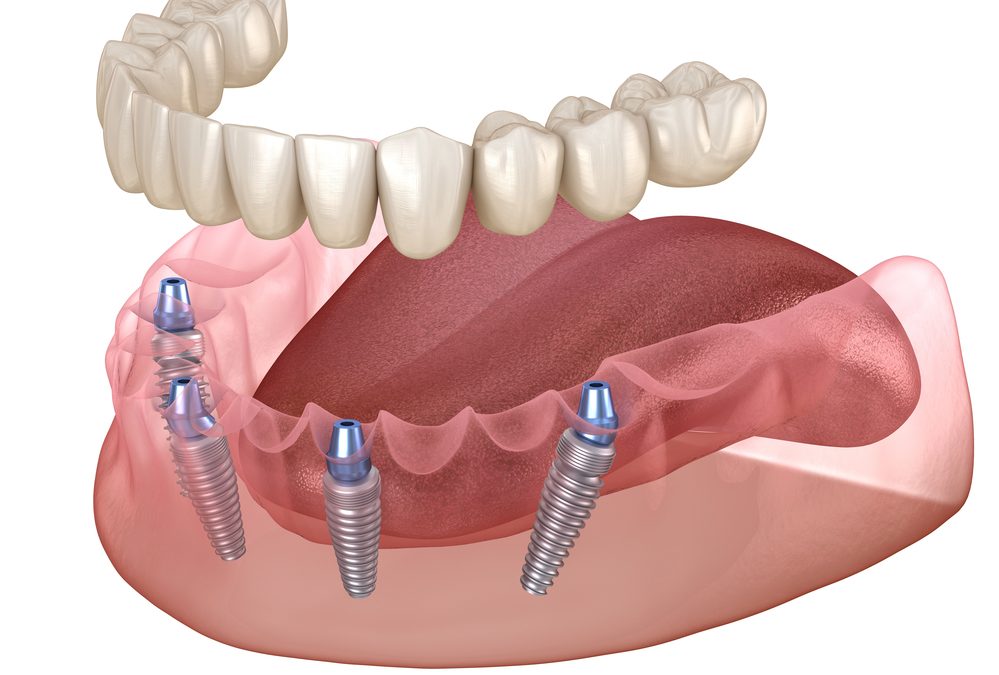
Somewhere in Australia right now, a dental technician is shaping a full set of teeth on a computer screen, long before anyone has picked up a drill. It’s a long way from the plaster casts and wax of old. And it’s one reason the All on 4 dental implant has become a regular topic in waiting rooms.
If you’ve lived with missing teeth or struggling dentures, it’s worth understanding what this treatment involves, what it asks of you, and where it doesn’t fit.
The idea in one minute
The concept is simple. Instead of replacing each tooth with its own implant, four implants per arch support a fixed bridge of replacement teeth. Angling the back two can help the dentist use the bone that’s available, which sometimes reduces the need for bone grafting, though not always.
It’s most often considered when a person has lost most of their teeth in the upper or lower jaw, or when remaining teeth are failing because of decay or advanced gum disease. For someone with just a few missing teeth, other options are usually a better fit.
Many people come to it after years of dentures that move, rub or limit what they can eat at the barbecue. That daily frustration is a big part of why the treatment gets so much attention.
The digital planning behind it
Planning is where this treatment has changed the most. A cone beam CT scan gives a 3D view of your jaw. An intraoral scanner records your teeth and gums without messy trays. Software then lets your dentist and a dental technician design the bridge and plan where each implant should sit, before surgery.
From there, a surgical guide can be 3D-printed to help place the All on 4 dental implants as planned. Not every case uses every tool, but the result is a plan you can see on screen before anything happens. That’s a big shift from guessing and adjusting on the day.
Some clinics also use digital design to preview how the new teeth may look, so you can comment on shape and shade before the final bridge is made. Ask to see your own scan and plan during your consult. A good clinician will be happy to explain it.
Surgery day, minus the drama
Surgery is typically done under local anaesthetic, often with sedation or, in some settings, general anaesthetic. It needs a registered practitioner with the right training. Afterwards, expect swelling, some discomfort and a soft-food diet for a while.
Many people are fitted with a temporary bridge soon after surgery, and the final one follows after healing, usually some months later. Exactly when depends on your case, and your dentist should explain the plan before you agree to anything.
A shift in how dentistry works
Digital design, 3D imaging and tighter links between dentists and labs are reshaping the landscape of modern dentistry, and All on 4 dental implants are one of the clearest examples. What once took many visits and a lot of trial and error can now be mapped out in detail.
Still, the human parts matter just as much. A good outcome depends on the dentist’s training, the quality of the planning, and your own commitment to cleaning and check-ups afterwards.
Honest limits and costs
Like any surgical treatment, the All on 4 dental implant carries risks. Implants can fail, and gum infection around them can develop if cleaning slips. Smoking and uncontrolled diabetes raise the odds of problems, and not everyone has enough bone, so some people need grafting first.
Medicare doesn’t generally cover this work, and private health extras vary, often with annual limits and waiting periods. Ask for an itemised written quote and check the practitioner’s registration on the
AHPRA public register. Advertising by registered practitioners must be truthful and not misleading, and testimonials are restricted.
Before you book
- Is the All on 4 dental implant right for my mouth, or are there better options?
- Can I see my scan and treatment plan?
- When will the temporary and final bridges be fitted?
- What’s the full itemised cost?
- How often will I need check-ups, and what does home care involve?
Write the answers down. They’re easier to compare across clinics than a memory of a friendly chat.
The point of it all
A fixed set of teeth won’t change who you are, but it can change how often you think about your mouth. For some people, that’s the whole point.
Take your time, ask for the plan in writing, and choose the team you trust. The best results tend to come from careful planning, not quick decisions.